National Minimum Wage 2026 South Africa: Your R30.23/Hour
Salary Guides
National Minimum Wage 2026 South Africa: Your R30.23/Hour
From 1 March 2026, South Africa's National Minimum Wage rises to R30.23/hour. Understand your rights & obligations as a worker or employer. Get updated salary breakdowns, compliance tips & expert insights.
by ShiftMate Editorial Team··27 min read·Updated 23 August 2026
AI-generated
TL;DR — Quick Answer
From 1 March 2026, South Africa's National Minimum Wage rises to R30.23/hour. Understand your rights & obligations as a worker or employer. Get updated salary breakdowns, compliance tips & expert insights.
South Africa's National Minimum Wage (NMW) increases to R30.23 per hour from 1 March 2026. This R1.44 (5%) rise aims to protect millions of low-income workers against rising living costs. The NMW applies broadly, including domestic and farm workers, ensuring a legal wage floor. Employers must proactively adjust payroll systems, while workers should verify their pay against the new rate. This adjustment reflects a continuous effort to balance worker dignity with business sustainability in a complex labour market.
New Rate: R30.23 per hour, effective 1 March 2026.
Monthly Minimum: R5,894.85 for a standard 195-hour month.
Key Impact: Applies equally to domestic, farm, and general workers.
Employment and Labour Minister Nomakhosazana Meth has announced that South Africa's National Minimum Wage (NMW) will rise from R28.79 to R30.23 per hour from 1 March 2026 — a 5% inflation-linked increase that affects millions of workers across the country. Understanding the national minimum wage 2026 gives South Africa candidates a real edge in advocating for fair pay in the year ahead.
This adjustment, published in Government Gazette No. 52053 on 4 February 2026, represents a R1.44 per hour increase designed to protect low-income workers against rising living costs. But as unemployment remains devastatingly high across South Africa, the announcement has sparked heated debate about whether minimum wage increases truly help or inadvertently hurt those they aim to protect.
Watch: Understanding the 2026 National Minimum Wage increase and what it means for South African workers and employers
Key Takeaways for National Minimum Wage 2026
New Legal Floor: The general National Minimum Wage for 2026 is R30.23 per hour, a 5% increase from the previous year.
Monthly Earnings: For a full-time worker (195 hours/month), this translates to a gross monthly income of R5,894.85 before deductions.
Broad Application: This rate applies universally to general workers, farm workers, and domestic workers, ensuring they cannot be paid below this legal minimum.
Compliance is Non-Negotiable: Employers must update payrolls by 1 March 2026 to avoid fines and CCMA disputes; workers have clear channels to report underpayment.
Understanding the National Minimum Wage 2026: The New Rates
According to the official government gazette, the updated National Minimum Wage rates from 1 March 2026 are crucial for all employers and workers to understand. This adjustment ensures that the legal floor for remuneration keeps pace with the cost of living.
Worker Category
Previous Rate (2025)
New Rate (2026)
Increase
General Workers
R28.79/hour
R30.23/hour
+R1.44 (5%)
Farm Workers
R28.79/hour
R30.23/hour
+R1.44 (5%)
Domestic Workers
R28.79/hour
R30.23/hour
+R1.44 (5%)
EPWP Workers
R15.16/hour
R16.62/hour
+R1.46 (10%)
Who Is Affected by the 2026 NMW?
The National Minimum Wage Act, as overseen by the Department of Employment and Labour, applies to virtually all workers and their employers across South Africa. This legal framework is designed to provide a basic safety net against exploitation, particularly for those in entry-level or low-skilled positions.
Workers Covered by the R30.23/hour Rate
Full-time and part-time employees in all sectors (e.g., retail, hospitality, manufacturing, security, cleaning, call centres)
Domestic workers, including cleaners, childminders, and gardeners
Farm workers, including seasonal agricultural labour
Casual and temporary workers, even for short shifts
Contract workers employed through agencies
Workers NOT Covered by General NMW
A few specific categories are excluded from the general NMW, primarily due to their unique employment structures or existing separate remuneration frameworks:
Members of the South African National Defence Force
National Intelligence Agency employees
South African Secret Service members
Volunteers who receive no remuneration (true volunteers, not underpaid workers)
Workers on EPWP (Expanded Public Works Programme) and learnerships (who have their own specific rates/allowances)
Minister Meth emphasised: "The 1st of March 2026 is the date on which this amendment shall become binding," underscoring the legal imperative for immediate compliance across the board.
What R30.23 Per Hour Means for Your Monthly Paycheck
For workers employed full-time, understanding the translation from an hourly rate to weekly and monthly earnings is essential for budgeting and assessing take-home pay. The Basic Conditions of Employment Act (BCEA) generally defines working hours, impacting these calculations.
Time Period
Calculation (Gross)
Amount (Gross)
Estimated Net After UIF*
Per Day (8 hours)
R30.23 × 8
R241.84
R239.42
Per Week (45 hours)
R30.23 × 45
R1,360.35
R1,346.75
Per Month (195 hours – 45 hrs/week)
R30.23 × 195
R5,894.85
R5,835.90
Per Month (160 hours typical – 40 hrs/week)
R30.23 × 160
R4,836.80
R4,788.43
*Estimated net pay after 1% UIF deduction (employee contribution) as per labour.gov.za. This does not include any potential PAYE (income tax) as minimum wage earners often fall below the tax threshold, or other deductions like provident funds.
The gross monthly wage of R5,894.85 (for a 195-hour month) is a critical figure for workers and employers. It represents the minimum an employee should receive before deductions like Unemployment Insurance Fund (UIF) contributions and, in some cases, Pay-As-You-Earn (PAYE) income tax, although many minimum wage earners fall below the tax threshold as per SARS regulations. Workers should also factor in transport costs, which for many in major metros like Johannesburg or Cape Town, can consume a significant portion of this wage.
Direct Impact on Domestic Workers and Employers
★★★★★4.8/5 from 2,400+ job seekers
Looking for work?
Get matched to jobs near you.
Create your free profile in 5 minutes. We'll WhatsApp you when a verified job matches.
100% freeNo CV neededVerified employers
Domestic workers have been fully covered by the National Minimum Wage since 2022, a significant step towards dignifying their labour. This means households employing domestic workers — whether for cleaning, childcare, gardening, or general household duties — must adjust pay to R30.23 per hour from 1 March 2026. This also includes ensuring proper registration with the UIF and adhering to all other aspects of the BCEA.
The Persistent Reality Gap for Domestic Workers
Despite legal protections, data reveals a troubling gap between legal requirements and actual practice, highlighting enforcement challenges:
Stats SA median: In recent years, median earnings for domestic workers have hovered around R2,350/month — less than half the legal minimum, indicating widespread non-compliance.
SweepSouth 2025 survey: Reported a median monthly wage of R3,932, still significantly below the current minimum.
SweepSouth platform workers: Earned a median of R5,545/month, which is closer to, and sometimes exceeding, the minimum for 2025. On an hourly basis, platform workers often achieve R33.71/hour, surpassing the 2026 NMW.
Our experience at ShiftMate shows that domestic work remains one of the hardest sectors to formalise and regulate, often due to informal agreements and a lack of awareness from both employers and employees. While platforms like SweepSouth are improving conditions for their workers, many domestic workers outside formal structures continue to be underpaid, leaving them vulnerable and without full access to social security benefits.
How the NMW Affects Small Businesses in KZN and Nationally
In KwaZulu-Natal, the impact of the R30.23 increase (effective March 2026) is felt most acutely in the agricultural, contract cleaning, and hospitality sectors — three of the province's largest employers of entry-level staff. Nationally, similar pressures apply to retail, security, and general manufacturing.
The Sectoral Clash and Compliance Costs
While the national NMW rate is R30.23, specific Bargaining Council agreements for certain sectors can mandate higher rates. For example, KZN's contract cleaning sector often follows specific Bargaining Council agreements which can be higher — up to R33.27 in metros like Durban and Umhlanga. Small businesses in these areas are caught between:
The new National Minimum Wage floor of R30.23/hour.
Potentially higher Bargaining Council rates that may apply to their specific sector and location.
Competition from informal operators who bypass compliance with either.
Impact on KZN Employers: A Numerical Example
Consider a small cleaning company in Durban employing 10 workers, each working a typical 160 hours/month:
Scenario
Monthly Wage Bill (10 Workers)
Annual Cost (10 Workers)
Additional Annual Burden
At R28.79 (2025 NMW)
R46,064
R552,768
—
At R30.23 (2026 NMW)
R48,368
R580,416
+R27,648
At R33.27 (Bargaining Council)
R53,232
R638,784
+R58,368 (vs. 2025 NMW)
The difference between minimum NMW compliance and Bargaining Council rates is nearly R60,000 per year for this small example — a significant burden for small operators already facing tight margins. This doesn't even account for other employer costs like UIF, Skills Development Levy (SDL), and potential Employee Assistance Programmes (EAPs).
Agricultural Sector Pressures
KZN's sugar cane and citrus farmers face similar challenges. Seasonal labour costs are rising while commodity prices remain volatile. Many farmers report being caught between:
Wanting to pay workers fairly and retain skilled hands.
Competing with mechanisation and cheaper imports.
Facing thin profit margins that leave little room for wage increases.
The Unemployment Reality: A Difficult Balance
The minimum wage increase comes against a backdrop of catastrophic unemployment that makes this issue far more complex than it appears. In South Africa, the debate over the NMW is uniquely high-stakes — it operates within a "perfect storm" of the world's highest unemployment rate and a massive skills deficit. According to Stats SA, these figures continue to paint a grim picture, particularly for the youth.
~33%Official Unemployment Rate (Q4 2025)
~42%Expanded Unemployment Rate (Q4 2025, incl. discouraged work seekers)
~60%Youth Unemployment (15-34)
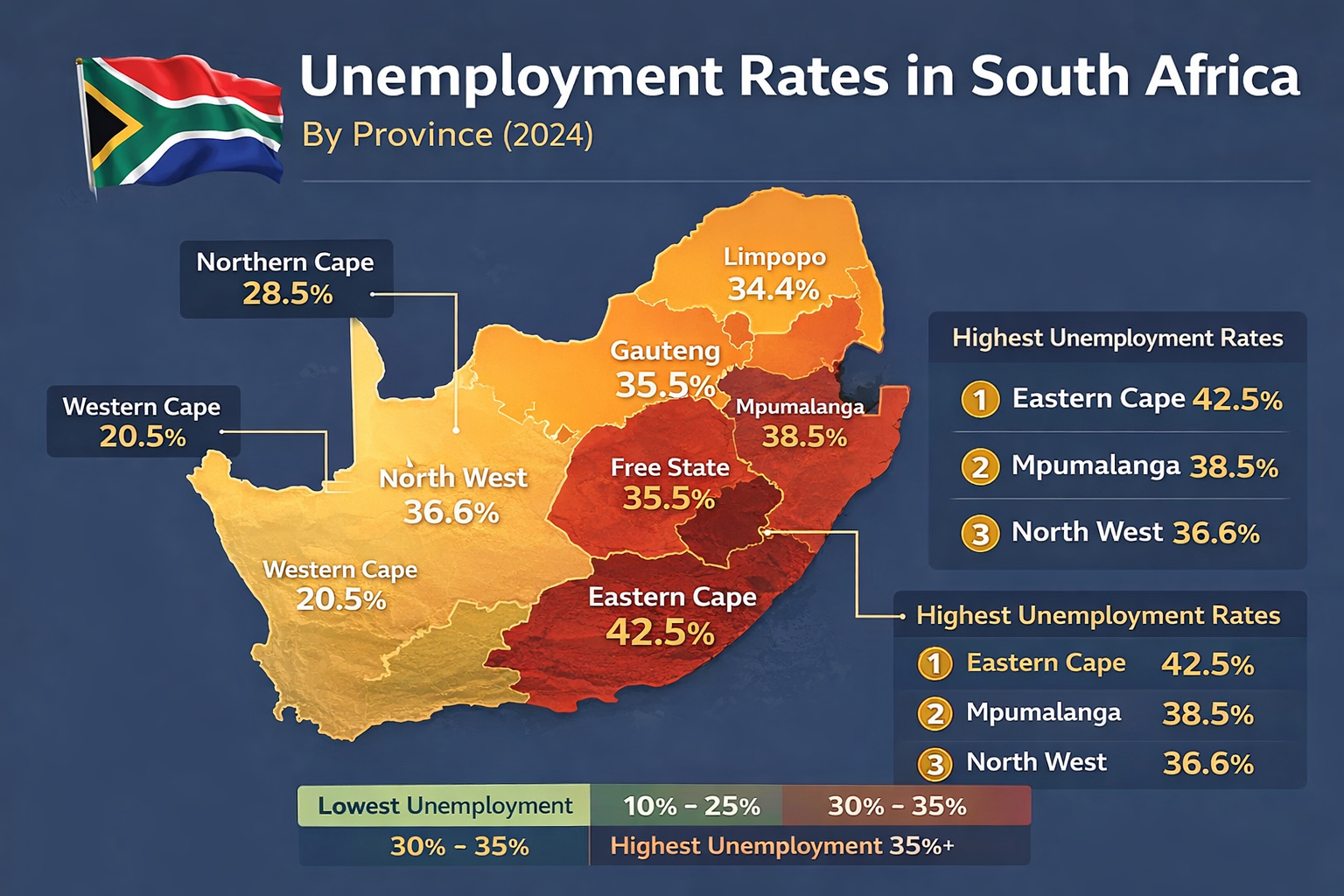
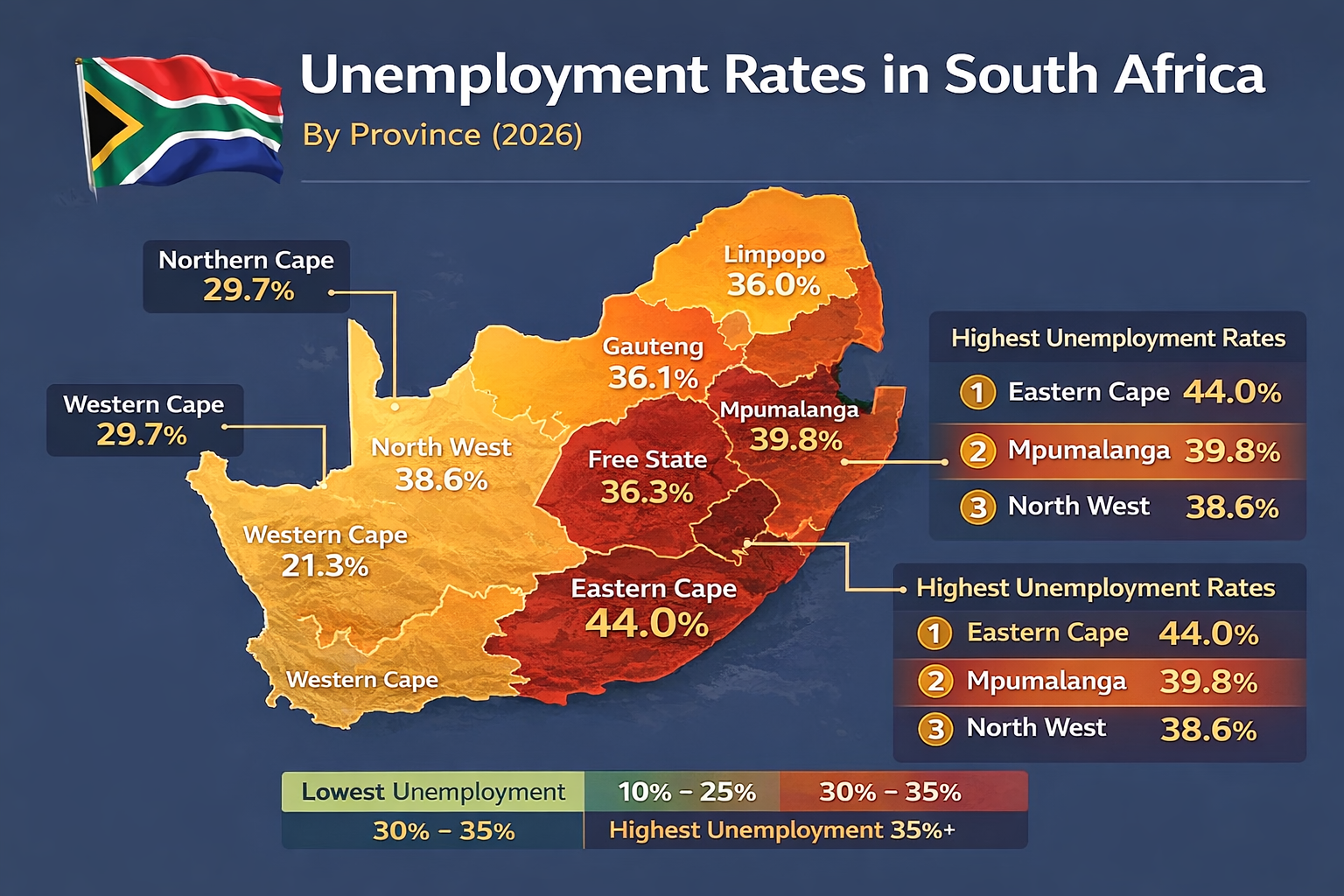
Unemployment Comparison: 2024 vs 2026
Provincial unemployment rates, as tracked by Stats SA, have shifted between 2024 and 2026. Here's how the landscape has changed, illustrating the continued pressure on job creation:
Provincial unemployment rates Q4 2024 — Eastern Cape highest at 42.5%, Western Cape lowest at 20.5%Provincial unemployment rates Q1 2026 — Eastern Cape worsens to 44.0%, most provinces see increases
Provincial Unemployment Comparison Table
Province
Q4 2024
Q1 2026
Change
Eastern Cape
42.5%
44.0%
+1.5%
Mpumalanga
38.5%
39.8%
+1.3%
North West
36.6%
38.6%
+2.0%
Free State
35.5%
36.3%
+0.8%
Gauteng
35.5%
36.1%
+0.6%
Limpopo
34.4%
36.0%
+1.6%
KwaZulu-Natal
33.1%
~34%
+0.9%
Northern Cape
28.5%
29.7%
+1.2%
Western Cape
20.5%
21.3%
+0.8%
Government is walking an incredibly fine line. On one hand, workers desperately need protection against exploitation and rising costs. On the other, there's only so far wages can be pushed before employers reduce hours, cut positions, or move to informal arrangements. The policy goal is admirable: a dignified living wage. However, the economic reality is harsh.
The truth is often painful: many South Africans would rather earn something than nothing at all, even if that something falls below the legal minimum, which perpetuates the cycle of informal employment. This creates an impossible choice between enforcing dignified wages and allowing any employment at all, especially for entry-level roles that often command the national minimum wage 2026. This is a challenge ShiftMate seeks to address by connecting compliant employers with eager job seekers, ensuring transparency in pay and conditions.
What South Africans Are Saying
The announcement of the new minimum wage has triggered passionate responses across social media platforms and public forums, reflecting the complexity and deeply personal impact of this issue on individuals and households:
"How is this going to prevent more unemployment if people are getting paid under the minimum wage? They do realize that not everyone is getting the minimum yearly increase on their salary?"
— Dorothy Ronald Schroeder
"I feel sorry for those who is going to lose their income as most households can not afford it anymore and more households will not have another choice but do their own housework and gardening."
— Dorothy Ronald Schroeder
"This minimum wage is here to benefit those employers that exploit employees. They will write that R30.20 on your payslip and schedule employees work 4hrs or 5hrs per day, come payday you still earning what you were earning 2 years back, basically you'll never see that improvement in your salary."
— Khanyisani Flow-Seecker Nzuza
"The state it's self struggles to pay the 28.79 rands per hour yet it keeps increasing it."
— Phetola Jafter Maake
These voices represent real concerns from working South Africans who see the gap between policy intentions and lived reality, particularly around issues of enforcement and the potential for job losses, especially in sectors like domestic work and small businesses where margins are tight.
Enforcement and Your Rights as a Worker
The National Minimum Wage is not optional. It is a legal requirement that all employers in South Africa must adhere to. The Department of Employment and Labour, along with the Commission for Conciliation, Mediation and Arbitration (CCMA), are the primary bodies responsible for upholding these rights. Knowing your rights under the BCEA and LRA is your first step to protection.
Legal Framework and Compliance Mandates
The NMW is the legal floor for remuneration — no employee may be paid below it.
It cannot be varied by individual contract, collective agreement, or any other informal arrangement. Any such agreement is null and void.
Altering working hours or conditions specifically to circumvent the NMW is considered an unfair labour practice and can lead to serious penalties.
Violations are investigated and enforced by the Department of Employment and Labour's inspectorate, who have powers to demand back pay and impose fines.
The CCMA handles disputes where a worker believes they have been unfairly paid or treated in relation to the NMW.
If You're Being Underpaid: Steps to Take
Document Everything: Keep meticulous records of your hours worked, payslips, bank statements showing wages received, and any communication with your employer regarding pay.
Communicate with Your Employer: If safe and appropriate, try to discuss the discrepancy with your employer first. Sometimes, it can be an honest mistake in payroll. Refer to the Government Gazette.
Contact the Department of Employment and Labour: If direct communication doesn't resolve the issue, or if you fear reprisal, contact your nearest Department of Employment and Labour office. Their inspectors can investigate.
File a Complaint with the CCMA: If the Department of Labour cannot resolve it, or if your employer refuses to comply, you can refer a dispute to the CCMA. They will attempt conciliation, and if that fails, the matter can proceed to arbitration.
Seek Assistance: Trade unions, legal aid organisations, or even community advice offices can offer guidance and support through the process.
Employers found in violation face significant fines, including a penalty of twice the amount of the underpayment. Persistent non-compliance can lead to criminal charges. It is critical for job seekers to understand these rights, and for employers to strictly adhere to the national minimum wage 2026 requirements.
Employer Compliance Checklist for National Minimum Wage 2026
If you employ staff in South Africa, ensuring compliance with the new National Minimum Wage is not just a legal obligation but also crucial for maintaining a fair and motivated workforce. Here's a checklist to help you prepare before 1 March 2026:
Review all employee wages against the new R30.23/hour rate, paying particular attention to entry-level roles, domestic workers, and farm workers.
Adjust all payroll systems and software to accurately reflect the increased minimum wage from 1 March 2026.
Ensure domestic workers receive at least R30.23/hour and that their UIF contributions are up to date.
Update employment contracts or issue addendums if wage adjustments are significant or require formal amendment.
Check Sectoral Determination rates for specific industries like Contract Cleaning, Wholesale and Retail, and Security on www.labour.gov.za, as these may mandate higher rates.
Communicate changes clearly and transparently to all affected employees before the effective date.
Maintain accurate records of hours worked and wages paid for every employee, as required by the BCEA, to prevent disputes.
Familiarise yourself with the CCMA dispute resolution process and the Department of Employment and Labour's enforcement guidelines.
Looking Ahead
The National Minimum Wage Act requires annual review of the rate, taking into account inflation, cost of living, wage trends, employment levels, and business impact. This means further adjustments can be expected in March 2027, continuing the government's efforts to balance worker protection with economic realities.
For workers struggling to find employment that pays the minimum wage, platforms like ShiftMate connect job seekers with verified employers who comply with labour laws. All shifts posted on our platform meet or exceed minimum wage requirements, giving you peace of mind and transparent pay. Whether you're looking for retail, call centre, or general labour roles, finding compliant work is easier.
Employers looking for reliable, verified temporary staff can post shifts through ShiftMate and access pre-screened workers immediately. Our system helps ensure compliance with the national minimum wage 2026 while providing the flexibility you need.
National Minimum Wage 2026: Frequently Asked Questions
What is the new National Minimum Wage for 2026?
The new National Minimum Wage for 2026 is R30.23 per hour, an increase of R1.44 (5%) from the previous year. This rate applies universally to most South African workers.
When does the R30.23 per hour minimum wage come into effect?
The R30.23 per hour minimum wage comes into effect on 1 March 2026. Employers are legally obligated to implement this new rate from this date onwards.
Does the 2026 National Minimum Wage apply to domestic workers?
Yes, the 2026 National Minimum Wage of R30.23 per hour applies fully to domestic workers. Employers of domestic staff must ensure they are paid at least this rate.
What is the monthly minimum wage for a full-time worker in 2026?
For a full-time worker doing a standard 195 hours per month (45 hours per week), the gross monthly minimum wage in 2026 is R5,894.85 before any deductions like UIF.
Can an employer pay below the National Minimum Wage if the worker agrees?
No, an employer cannot legally pay below the National Minimum Wage (NMW), even if the worker agrees. Any contract or agreement that attempts to do so is invalid, and the employer can face penalties.
Who enforces the National Minimum Wage in South Africa?
The National Minimum Wage is enforced by the Department of Employment and Labour's inspectorate. Workers who believe they are being underpaid can also file a dispute with the Commission for Conciliation, Mediation and Arbitration (CCMA).
Are there different minimum wage rates for specific industries?
While the National Minimum Wage sets a legal floor of R30.23/hour, some specific industries have Sectoral Determinations or Bargaining Council agreements that mandate higher minimum wages. Employers should check the Department of Employment and Labour website for applicable rates in their sector.
What happens if an employer doesn't comply with the 2026 NMW?
Employers found not complying with the 2026 NMW can be ordered to pay employees the difference, plus interest, and may face significant fines. Persistent non-compliance can lead to further legal action and even criminal charges.
This article was published on 4 February 2026 following the official Government Gazette announcement. ShiftMate is committed to supporting both workers and employers in navigating South Africa's labour landscape fairly and transparently.
Author: Mike Steenkamp | Founder & CEO, ShiftMate | 20+ years SA hiring experience
We send matching jobs to your phone — completely free.
Job alerts on WhatsApp
“
Got a WhatsApp link on Wednesday, started at Checkers on Monday. Was job hunting 6 months before this.
Nompumelelo T. · Durban North ★★★★★
No spam·Unsubscribe anytime·10 seconds to sign up
“Matched me to a call centre 3km from home. First salary hit in 2 weeks. No agency, no CV.”
Sipho M. · Johannesburg ★★★★★
“Sent my number on a Tuesday. By Friday I had an interview. ShiftMate is the real deal.”
Zanele N. · Pretoria ★★★★★
“No CV, no experience required. Just my number. Got placed at a warehouse in Durban in under a week.”
Thabo K. · Durban ★★★★★
South Africa's call-centre talent marketplace
The fast, smart way for top BPOs and call-centre operators to discover and connect with South Africa's best pre-assessed agents — filtered by province.
Looking for work
Get discovered by top operators
Sign up free, prove your skills, and get matched with call-centres hiring across South Africa.